Class L Fire according to ISO 3941:2026 and Lithium-Ion Battery Fire Safety.
Class L fire is a new fire classification introduced to address lithium-ion battery fire risks under ISO 3941:2026.
Once, fire safety standards were focused on things like solids, liquids, and gases.
But lithium-ion batteries changed this.
Class L fire clearly covers the dangers of battery overheating.
This means that fire prevention plans need to change quickly.
Also, lithium-ion fires act differently from regular fires.
Prefer a quick visual overview? Watch the video below for a practical explanation of Class L fire.
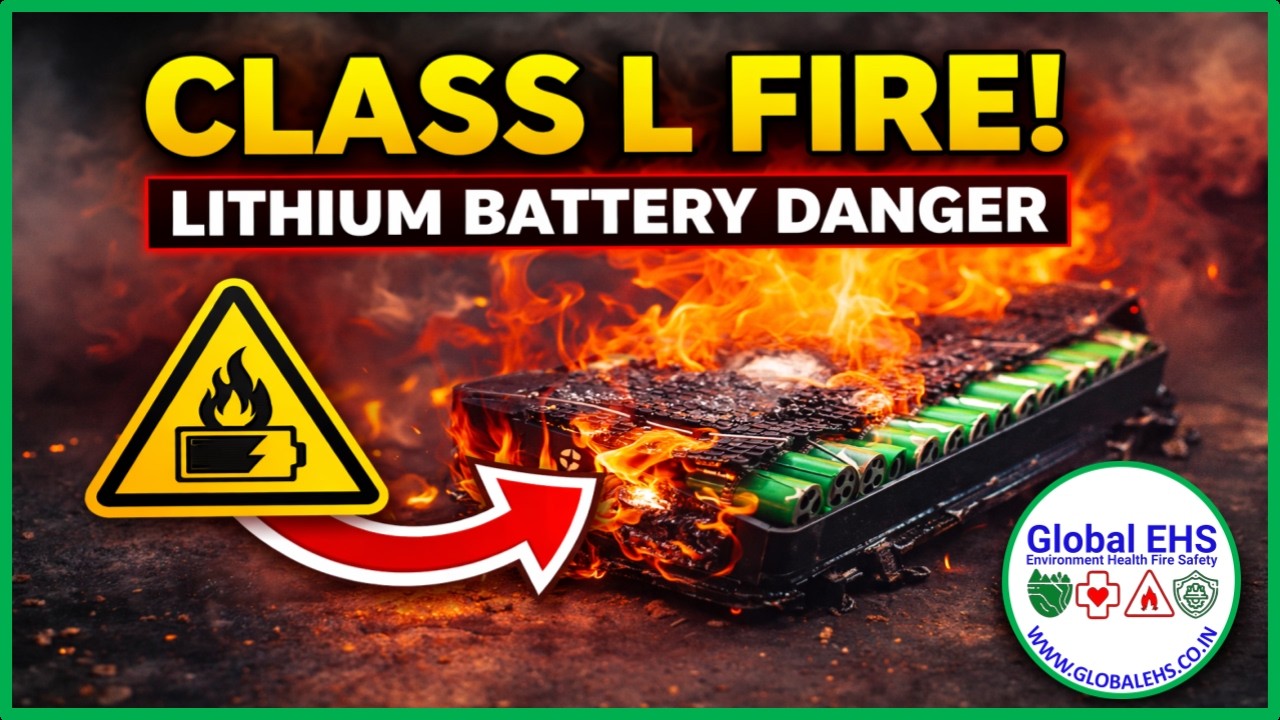
What Is Class L Fire Under ISO 3941:2026?
Class L fire involves lithium-ion cells and batteries that don’t have metallic lithium.
Basically, it applies to the common batteries used in phones, laptops, tools, electric vehicles, and energy storage systems.
Even though they are common, these fires release extreme heat rapidly.
In fact, lithium-ion battery fires often involve thermal runaway.
So if one cell fails, it can start a chain reaction that causes other cells to catch fire.
Also, these fires can release dangerous gases and may reignite.
Because of this, ISO changed the fire classification system to match modern energy risks.
This classification comes from ISO, which develops global safety standards.
However, the official ISO 3941:2026 document remains copyrighted and paid.
Why Lithium-Ion Fires Are Different
Lithium-ion fires are different from Class A, B, or C fires.
For example, using water might cool the surface a temporary.
However the internal battery heat still continues. This makes re-ignition more common.
These fires are not only hot but also release harmful fumes.
Also, the battery casing can break suddenly. Because of this, cooling and keeping the fire away are more important than putting out the flames.
According to the National Fire Protection Association, most lithium-ion battery incidents are too big for portable fire extinguishers to handle.
Similarly, Underwriters Laboratories testing shows that battery systems can spread fire easily.
Impact on Fire Extinguishers and Standards
Because of the new Class L fire classification, standards for fire extinguishers are changing.
For example, CEN/TC 70 is working on prEN 3-11.
This document is a draft to test extinguishers for use on small lithium-ion fires.
But keep in mind that portable extinguishers can’t stop large thermal runaway events.
Instead, cooling, keeping space, and containing the fire are more effective.
So, labels on extinguishers will soon include more details about this.
Workplace Safety and Regulatory View
From a workplace safety angle, lithium-ion batteries are now high-risk equipment.
OSHA recommends strict rules on how to store, charge, and inspect these batteries.
Moreover, damaged batteries must be isolated immediately.
Similarly, the International Labour Organization stresses the need for worker training and awareness of these risks.
Additionally, emergency response plans should include what to do in case of a lithium-ion fire.
Practical Safety Measures for Class L Fire Risks
To be clear about what to do, organizations should follow these steps:
- First, limit the number of batteries in work areas.
- Second, store batteries in areas that are fire-resistant.
- Third, keep an eye on the charging process all the time.
- Fourth, train workers to recognize the signs of thermal runaway.
- Lastly, update emergency procedures to include lithium-ion fires.
If there is a sudden venting, people should evacuate right away.
In other words, trying to put out the fire should stop.
All in all, prevention remains the strongest control.
Legal and Compliance Disclaimer
This article provides general safety information only.
It is not a replacement for official standards.
For legal and compliance purposes, purchase the ISO 3941:2026 document directly from ISO or your local standards body.
This ensures that you are using accurate and accepted information.
In short, Class L fire clearly shows the dangers of the lithium-ion age.
While traditional fire classes are still important, battery fires require special strategies.
Therefore, organizations must update their fire safety programs now.
Quick Recap of key things about Class L Fire in Video Format
Without a doubt, the Class L fire classification will influence how extinguishers design, workplace safety, and how emergency planning.
In the long run, being aware and preventing fires will save both lives and property.