Class D fire is one of the most dangerous types of industrial fires.
It happens when certain metals catch fire and react strongly with heat and oxygen.
If you use the wrong way to put out the fire, it can cause more damage quickly.
It’s really important to understand it because it can hurt people and damage buildings.
Watch this critical video now to master Class D fires behavior and the ONLY safe way to use a Class D fire extinguisher.
What is a Class D fire?
It happens when combustible metals start burning.
Examples include magnesium, sodium, lithium, titanium, and potassium.
These fires burn at very high temperatures, so they need special handling.
It behaves unpredictably.
As has been noted, metal particles may explode when disturbed.
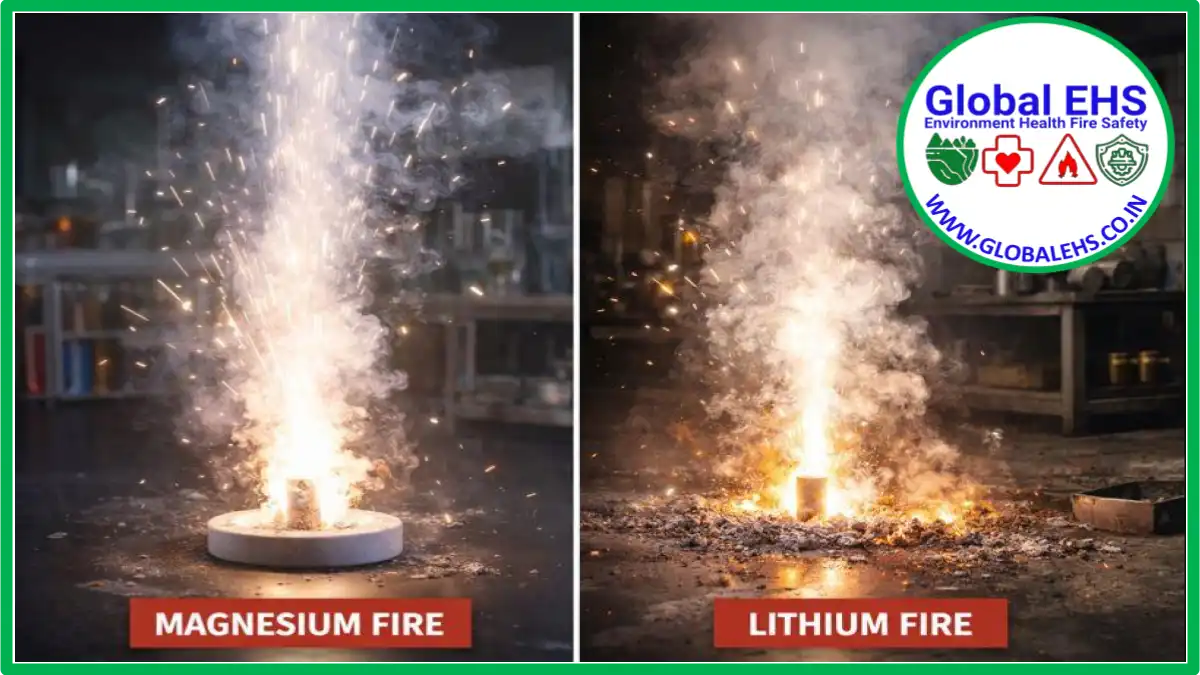
Why is Class D fire so dangerous?
It gives off a lot of heat, which can cause nearby materials to catch fire quickly.
Molten metal can spread the fire even more.
Using water can make the situation worse.
Since metals react in chemical ways, explosions can happen suddenly.
Because of this, it need expert handling.
Common causes of Class D fires
These fires often start during metal processing.
For instance, grinding can create metal dust that is easy to ignite.
Improper storage can set up conditions for a fire to start.
Also, static electricity can be a cause.
In battery manufacturing, exposure to lithium increases the risk.
This means that managing risks is very important.
Why water, foam, and CO2 fail
Water reacts violently with burning metals.
This can create hydrogen gas, which can explode.
Foam breaks down too quickly.
Similarly, carbon dioxide cannot cool molten metal.
Therefore, only Class D fire extinguishers are safe to use.
Class D Fire Extinguisher: What Is Inside It?
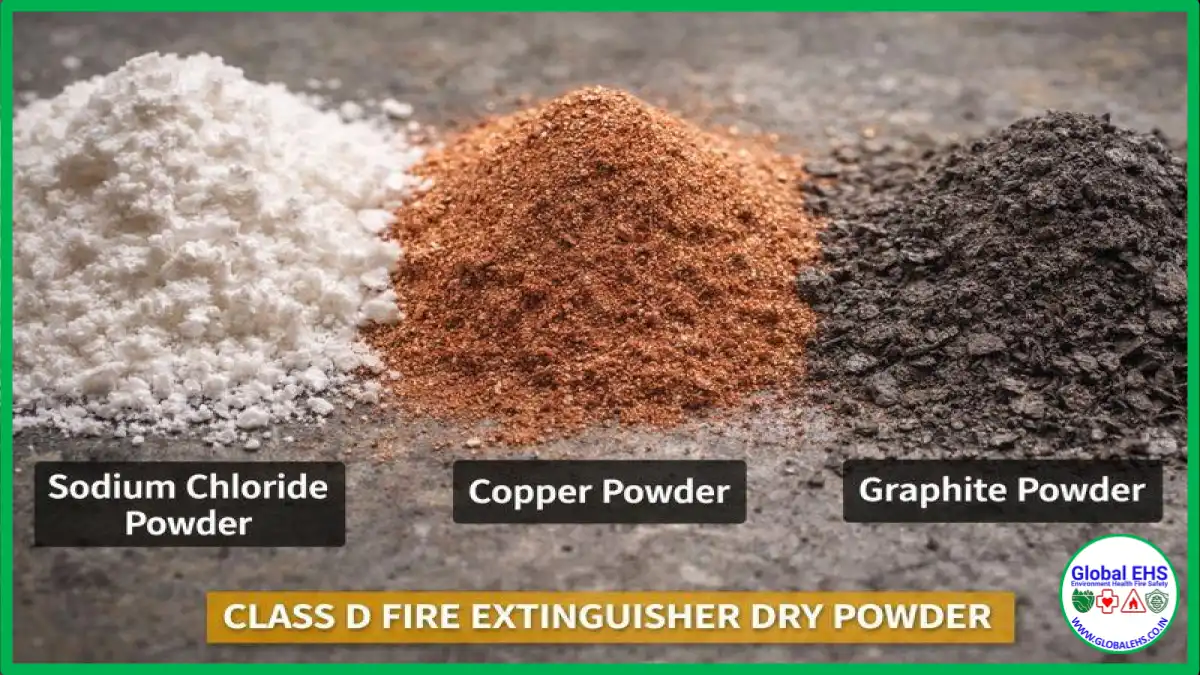
- A Class D fire extinguisher uses dry powder, not water or foam.
Types of extinguishing materials used;
1. Sodium chloride-based powder
- This powder is mostly sodium chloride with other additives.
- When used, it melts and forms a layer that stops oxygen from reaching the fire.
✔ Used for magnesium and sodium fires
✖ Not safe for lithium fires
2. Copper powder
- Lithium burns in a special way, so copper powder is the right choice.
- Copper takes in heat quickly and stops the fire safely.
3. Graphite-based powder
- Graphite takes heat away from the fire and doesn’t react with it.
- This powder is good for fires involving titanium and zirconium.
4. Sodium carbonate powder
- This type is used for lower-temperature metal fires.
- It’s not used as much these days.
How Class D fire extinguishers work?
- The powder covers the burning metal.
- It also takes in the extreme heat.
- A solid layer forms, which blocks oxygen.
- This stops the fire from starting again.
- So the fire is put out safely.
Correct Application Technique
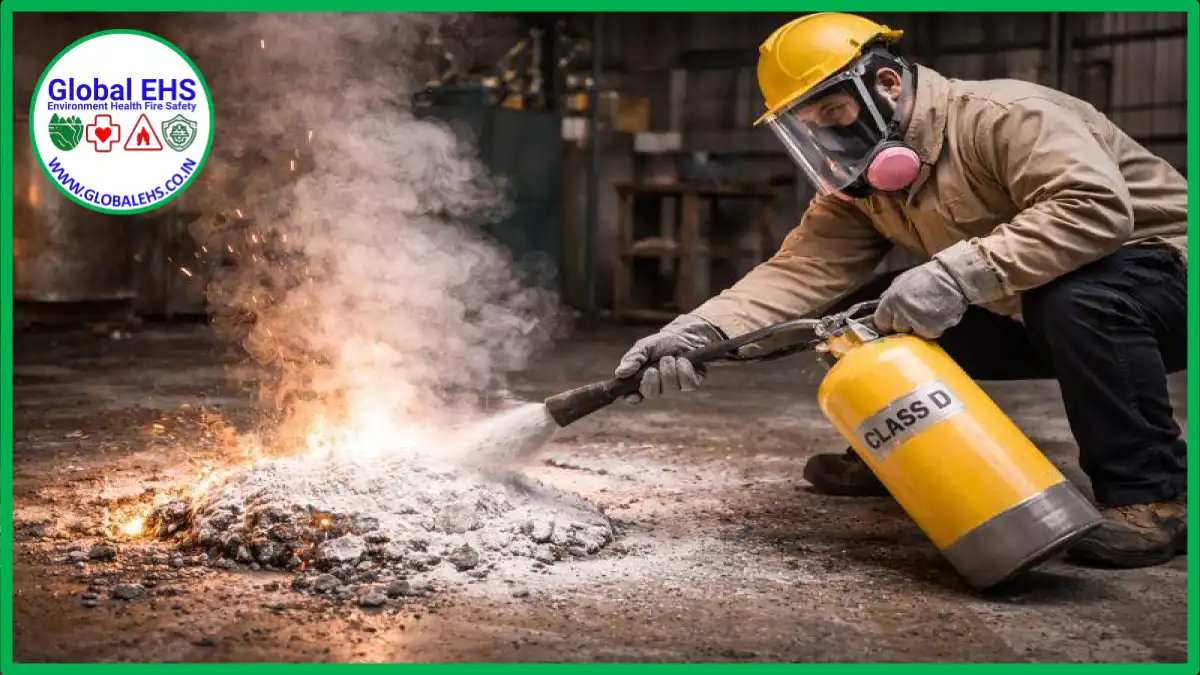
- First, check what kind of metal is burning.
- Then, choose the right extinguisher.
- Apply the powder gently.
- If you use too much force, the metal can spread.
- Let the solid layer stay undisturbed.
- Afterward, check if the area is still hot.
Prevention of Class D Fires
- Storing metals properly helps reduce the risk.
- For example, keep them away from moisture.
- Control possible sources of fire.
- Also, remove metal dust regularly.
- Training workers is important.
Ultimately, Prevention can save lives.
Quick Recap key things about Class D Fire in Video Format
Before concluding, revisit the key things about Class D discussed above in this short video.